
Keys & Concierge: A Curated Luxury Car Rental Stay at the Albert Hotel in Fredericksburg

Porsche 911 Carrera S Bridal Exit in Fredericksburg: A Wedding-Weekend Statement in the Texas Hill Country
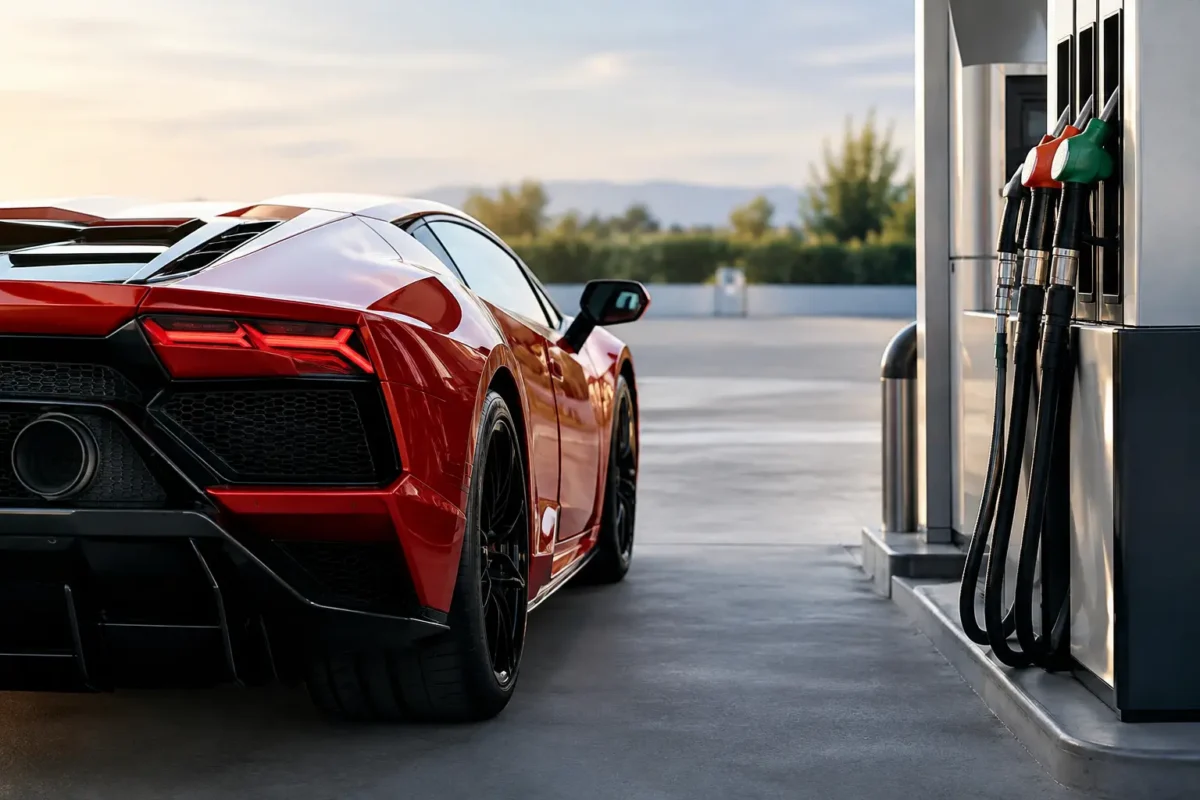
A supercar can turn an ordinary drive into an occasion – until the wrong fuel choice puts a question mark over the experience. So, do supercars need premium fuel? In most cases, yes. High-octane gasoline is not a luxury add-on for an exotic car. It is often the fuel the engine was engineered to use for its intended power, response, and refinement.
That does not mean every vehicle wearing a performance badge has the same requirement, or that the most expensive pump option is automatically correct. The answer is found in the owner’s manual, the fuel-filler label, and the specific engine beneath the sculpted bodywork. For a Porsche, Maserati, Aston Martin, or Corvette, those details deserve the same attention as the route you choose through the Hill Country.
Do Supercars Need Premium Fuel for Every Drive?
If a manufacturer specifies premium fuel as required, use it every time. This is common in high-compression, turbocharged, and heavily tuned performance engines. Premium gasoline has a higher octane rating, usually 91 or 93 in the United States, which helps resist premature combustion inside the cylinders.
That premature combustion, often called knock or pinging, is not simply an unpleasant sound. Under the wrong conditions, it can place harmful stress on engine components. Modern performance cars are remarkably intelligent and use sensors to detect knock, then adjust ignition timing to protect the engine. But protection is not the same as peak operation. When the car pulls timing, it may produce less power, feel less eager under acceleration, and lose some of the polished precision that makes it special.
If premium is recommended rather than required, the car can generally run on regular fuel in a pinch. Yet it may not deliver its published output, best throttle response, or optimal fuel economy. In a daily commuter, that compromise may be easy to ignore. In a car selected for the sound of its exhaust, the immediacy of its acceleration, and the theater of a sweeping two-lane road, it rather defeats the point.
The most important distinction is simple: follow the vehicle, not the stereotype. Some capable sports cars are designed for regular unleaded. Some luxury models require premium despite having modest horsepower figures. A badge alone cannot tell you what belongs in the tank.
Why Octane Matters in a Supercar
Octane is frequently mistaken for a measure of fuel quality or energy. It is neither, at least not in the way drivers often assume. A higher octane number does not mean the fuel is more powerful by itself, nor does it mean it is universally better for every engine. It means the gasoline is more resistant to self-igniting under pressure and heat.
That resistance matters when an engine runs high compression, forced induction, aggressive ignition timing, or a combination of all three. These are the ingredients behind much of the effortless performance expected from modern exotics. The engine compresses the air-fuel mixture intensely, and the spark plug must ignite that mixture at exactly the commanded moment. Premium fuel gives engineers more room to pursue power without inviting destructive knock.
Think of it as part of the car’s complete calibration. The intake, turbochargers or supercharger, cooling system, ignition map, and fuel requirement were developed as one arrangement. Changing to lower octane is not always catastrophic, especially for a brief emergency fill-up, but it asks the engine management system to make accommodations.
Texas heat can make that margin more relevant. High ambient temperatures, long uphill pulls, full passenger loads, and enthusiastic acceleration all add thermal demand. On a warm afternoon outside Fredericksburg, the correct octane is a small decision that helps preserve the composed, confident character drivers expect from a high-performance machine.
Required, Recommended, and “Minimum” Labels
Fuel guidance usually appears in one of three forms. “Premium required” leaves little room for interpretation. Use the stated minimum octane, and do not assume midgrade is close enough. “Premium recommended” gives more flexibility, but the manufacturer is signaling where the car is likely to perform at its best.
A label stating “91 AKI minimum” is especially clear. AKI is the anti-knock index displayed on American fuel pumps, often shown as `(R+M)/2`. If the label says 91 minimum and the station sells 87, 89, and 93, choose 93. Do not average grades in your head or rely on a nearby pump’s marketing language.
The owner’s manual remains the final authority. It can also include important details regarding ethanol content, fuel storage, track use, or regional fuel variations. That matters for collector-grade vehicles and low-mileage cars, where fuel freshness can be as significant as octane.
What Happens if You Use Regular Gas?
One tank of regular gasoline in a vehicle that calls for premium is unlikely to turn a beautiful weekend into an engine-repair crisis. Most current supercars have knock sensors and sophisticated control systems designed to respond before serious damage occurs. The practical result is often reduced performance and a less crisp power delivery.
The risk rises when lower-octane fuel becomes a habit, especially under hard acceleration or high load. Repeated knock-control intervention can leave the engine operating outside the conditions for which it was optimized. Older vehicles, highly modified cars, and cars with less advanced engine management deserve even more caution.
If regular fuel goes in by mistake, avoid treating the next stretch of road like a launch control demonstration. Drive gently, top up with the correct premium fuel as soon as practical, and refer to the manual or rental provider if you have concerns. There is no need for drama, but there is every reason to be deliberate.
Premium Fuel Does Not Mean Any Premium Pump Will Do
The octane number is only one part of fueling well. Choose a busy, reputable station where fuel is likely to be fresh and the equipment is well maintained. Use the fuel grade specified for the car, and make sure the nozzle is labeled for gasoline, not diesel or an alternative blend that is not approved by the manufacturer.
For most modern performance cars, gasoline containing up to 10% ethanol is normal and acceptable when the manual permits it. Higher-ethanol blends, such as E15 or E85, are a different matter. Unless a car is explicitly designed or tuned for them, they should not be treated as an upgrade. Ethanol compatibility involves fuel-system materials, calibration, and fueling volume – not just the number printed on the pump.
There is also no virtue in selecting a higher octane than the manufacturer requires if it is not available as the specified grade. A car designed for 91 will run beautifully on 93, but 93 does not create bonus horsepower simply because it costs more. The goal is correctness, not excess.
Fueling a Supercar Rental With Confidence
A rented exotic deserves the same care as an owned one, with one additional rule: the rental agreement and the host’s instructions come first. Premium rental fleets are maintained to exacting standards, and the fueling policy helps protect that standard for every guest who follows.
Before leaving the station, verify the grade on the pump screen and receipt. It takes seconds and removes uncertainty. Avoid waiting until the gauge is nearly empty, particularly in a destination where the next ideal fuel stop may be several miles beyond a scenic detour. If a warning light appears, the car feels unusual, or you are uncertain about a fuel label, pause and ask rather than guess.
At Kraft & Klasse, the point is not merely to arrive at the next winery, dinner reservation, or overlook. It is to enjoy the complete character of an icon of performance with the confidence that every detail has been handled properly.
The best fuel choice is rarely glamorous, but it protects the glamorous part: the clean surge of acceleration, the tailored soundtrack, and the pleasure of making the journey part of the story. Read the label, choose the required octane, and let the road have the final word.